



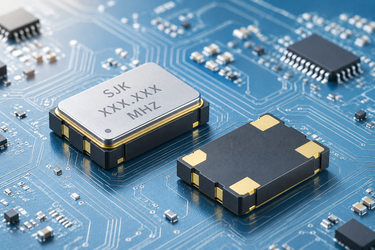
The Complete Guide to AEC-Q200 Certified Automotive Crystal Oscillators
Modern vehicles rely on hundreds of electronic control units to manage everything from engine performance and battery systems to safety features and autonomous driving functions. Behind many of these systems is a small but essential timing component: the automotive crystal oscillator. While it may not receive the same attention as processors or sensors, its reliability directly affects system synchronization, communication accuracy, and long-term operational stability.
Automotive environments expose electronic components to extreme temperatures, vibration, humidity, and electrical stress. That's why manufacturers increasingly specify AEC-Q200 crystal products for critical applications. But what exactly does AEC-Q200 certification mean, and why is it so important when selecting timing components for modern vehicles?
What Does AEC-Q200 Certification Mean for Timing Components?
AEC-Q200 is a qualification standard established by the Automotive Electronics Council (AEC) for passive electronic components used in automotive applications. The standard defines rigorous stress tests designed to ensure components can withstand the harsh conditions commonly encountered in vehicles.
For timing devices, an AEC-Q200 crystal must successfully pass a wide range of environmental and mechanical reliability tests, including:
- Temperature cycling
- High-temperature operating life
- Mechanical shock testing
- Vibration testing
- Moisture resistance evaluation
- Solderability verification
- Thermal shock testing
Unlike standard commercial crystals, automotive grade timing components must demonstrate stable performance under conditions that may vary dramatically throughout a vehicle's service life.
Why Certification Matters
Automotive systems often operate continuously for more than a decade. A timing component failure could impact multiple subsystems, resulting in communication errors, synchronization issues, or even safety-related malfunctions.
AEC-Q200 qualification helps automotive manufacturers:
- Improve long-term reliability
- Reduce warranty risks
- Meet functional safety requirements
- Ensure stable operation in harsh environments
- Support regulatory compliance
For Tier 1 suppliers and OEMs, AEC-Q200 certification is often a mandatory requirement rather than an optional feature.
Testing Beyond Basic Performance
Many engineers focus primarily on frequency tolerance and stability. However, automotive qualification evaluates far more than electrical performance.
AEC-Q200 testing also validates:
| Qualification Area | Purpose |
|---|---|
| Mechanical Stress | Ensures durability under vibration and shock |
| Thermal Reliability | Verifies operation across extreme temperatures |
| Environmental Resistance | Protects against moisture and contamination |
| Long-Term Stability | Maintains frequency accuracy over time |
| Manufacturing Consistency | Reduces field failure rates |
This broader evaluation helps ensure that automotive electronic components remain dependable throughout the vehicle lifecycle.
Standard Crystals vs. Automotive-Grade Crystals: Core Differences
At first glance, a standard crystal and an automotive crystal oscillator may appear nearly identical. Both generate precise timing references, and both use quartz crystal technology. The differences become apparent when reliability requirements are examined more closely.
Reliability and Environmental Resistance
Automotive-grade devices are specifically engineered to tolerate:
- Continuous vibration
- Frequent thermal cycling
- High humidity environments
- Voltage fluctuations
- Long operational lifetimes
Standard commercial crystals are generally optimized for consumer electronics, where environmental stress is less severe.
As a result, automotive crystal oscillators often feature enhanced packaging, tighter process control, and more comprehensive testing.
Performance Expectations
The following comparison highlights some typical differences:
| Feature | Standard Crystal | Automotive-Grade Crystal |
|---|---|---|
| Qualification Standard | Commercial | AEC-Q200 |
| Temperature Range | Limited | Extended Automotive Range |
| Vibration Resistance | Moderate | High |
| Reliability Screening | Basic | Extensive |
| Service Life Expectation | Consumer-Level | Automotive Lifecycle |
| Failure Risk in Harsh Conditions | Higher | Lower |
For vehicle electronics that must remain operational for many years, these distinctions are significant.
In addition, automotive-grade products often undergo tighter frequency stability verification because communication systems increasingly depend on precise timing synchronization.
Why Automotive Designs Demand Higher Standards
A modern vehicle may contain dozens of networked control modules communicating via CAN, LIN, Ethernet, and other protocols. Timing inaccuracies can gradually affect communication integrity and synchronization efficiency.
This is particularly important as electric vehicles and autonomous driving technologies become more sophisticated. A component that performs adequately in a smartphone may not meet the reliability requirements of an automotive platform.
Critical Automotive Applications
Automotive crystal oscillators are found throughout modern vehicles, supporting a wide range of electronic functions.
Advanced Driver Assistance Systems (ADAS)
ADAS technologies rely heavily on accurate timing for sensor fusion and data processing.
An ADAS crystal oscillator helps synchronize:
- Radar systems
- LiDAR modules
- Camera systems
- Central processing units
- Vehicle communication networks
These systems continuously exchange large amounts of real-time data. Even minor timing errors can affect synchronization performance and overall system efficiency.
As autonomous driving technologies evolve, timing accuracy becomes increasingly critical.
In many ADAS architectures, multiple sensors operate simultaneously while sharing information through high-speed communication networks. Maintaining synchronization among these devices requires highly stable frequency control components capable of operating reliably under temperature fluctuations and vibration.
Because safety is involved, automotive engineers often prioritize AEC-Q200 crystal solutions that have demonstrated long-term reliability in demanding environments.
Tire Pressure Monitoring Systems (TPMS) & EV Battery Management
Another important application area involves wireless monitoring systems and electric vehicle power management.
TPMS Crystal Requirements
A TPMS crystal supports wireless tire pressure sensors that continuously transmit status information to the vehicle control system.
These applications require:
- Low power consumption
- High reliability
- Compact size
- Long operational lifespan
Because sensors are installed within rotating wheels, they experience significant vibration and temperature variation. A qualified TPMS crystal must maintain stable operation despite these challenges.
EV Battery Management Systems
Battery management systems (BMS) are among the most critical electronic subsystems in electric vehicles.
Timing components help coordinate:
- Cell voltage monitoring
- Current measurement
- Temperature sensing
- Charge balancing
- Safety protection functions
Any communication instability within the battery management network can affect system efficiency and safety.
As EV adoption grows worldwide, demand for automotive grade timing components continues to increase.
Key Specifications for Automotive Crystal Selection
Selecting the right automotive crystal oscillator involves more than simply choosing a frequency value.
Engineers should evaluate multiple technical parameters to ensure long-term performance.
Frequency Stability
Frequency stability determines how accurately the oscillator maintains its specified frequency under varying conditions.
Key factors include:
- Temperature stability
- Aging characteristics
- Voltage sensitivity
- Mechanical stress tolerance
Applications such as ADAS and vehicle networking typically require tighter stability specifications.
Operating Temperature Range
Automotive electronics often experience extreme environmental conditions.
Typical qualification ranges include:
- -40°C to +85°C
- -40°C to +105°C
- -40°C to +125°C
The selected oscillator must maintain stable operation throughout the intended temperature range.
Package Reliability
Packaging design significantly influences long-term durability.
When evaluating an AEC-Q200 crystal, engineers should consider:
- Hermetic sealing quality
- Mechanical robustness
- Moisture resistance
- Shock performance
- Vibration resistance
High-quality packaging helps protect the crystal from environmental degradation and mechanical stress.
Frequency Tolerance and Aging
Although initial frequency tolerance is important, long-term aging performance is equally critical.
Automotive platforms are expected to remain operational for many years. Components with low aging rates help preserve communication accuracy and system synchronization throughout the vehicle's lifespan.
Supplier Qualification
Finally, selecting an experienced supplier is often just as important as choosing the correct specification.
A reliable manufacturer should provide:
- AEC-Q200 qualification documentation
- Automotive quality management systems
- Consistent production processes
- Traceability support
- Engineering consultation
Working with an established supplier reduces risk during both development and mass production.
Conclusion
As vehicle electronics become more sophisticated, the importance of reliable timing solutions continues to grow. An AEC-Q200 crystal provides the durability, stability, and environmental resistance required for modern automotive systems, from ADAS platforms to TPMS sensors and EV battery management networks.
With more than 36 years of experience in frequency control technology, SJK offers high-performance automotive crystal oscillators, crystal resonators, TCXOs, VCXOs, and customized timing solutions designed for demanding automotive applications. If you're looking for reliable automotive grade timing components backed by proven manufacturing expertise, SJK is ready to support your next project.
FAQ
What is an AEC-Q200 crystal?
An AEC-Q200 crystal is a quartz timing component that has passed automotive qualification testing for temperature, vibration, shock, humidity, and long-term reliability.
Why is an automotive crystal oscillator different from a standard crystal?
An automotive crystal oscillator is designed and tested to withstand harsh automotive environments, offering greater reliability and durability than standard commercial products.
Where is an ADAS crystal oscillator used?
An ADAS crystal oscillator is commonly used in radar systems, cameras, LiDAR sensors, processing units, and vehicle communication networks.
What are the key requirements for a TPMS crystal?
A TPMS crystal must provide low power consumption, stable frequency performance, vibration resistance, and long operational life.
Why are automotive grade timing components important?
Automotive grade timing components help ensure accurate communication, system synchronization, and reliable operation throughout a vehicle's lifespan.
How do I select the right AEC-Q200 crystal?
Engineers should evaluate frequency stability, operating temperature range, aging performance, package reliability, and supplier qualification when selecting an AEC-Q200 crystal.

Contact
Official Chinese website:www.q-crystal.com.cn
Satisfaction quality, Just-in-time service, and Key-cost offering
©2026 SJK All Rights Reserved.