



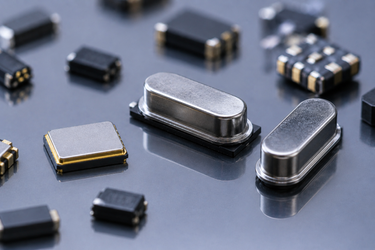
What is Quartz Crystal Aging? Causes, Impacts, and Mitigation Strategies
Every engineer expects a quartz crystal to provide stable frequency performance throughout a product’s lifecycle. However, even the highest-quality crystal does not maintain exactly the same frequency forever. Over months and years of operation, small frequency changes naturally occur due to a phenomenon known as quartz crystal aging.
For many consumer devices, these changes may go unnoticed. But in telecommunications equipment, industrial automation systems, automotive electronics, and precision timing applications, long-term frequency drift can affect synchronization accuracy, communication reliability, and overall system performance. Understanding why crystal aging occurs—and how to minimize it—can help engineers make better component selection and sourcing decisions. So, what causes quartz crystal aging, and how can manufacturers reduce its impact?
Defining Crystal Aging and Long-Term Frequency Stability
Quartz crystal aging refers to the gradual and irreversible change in a crystal's resonant frequency over time. This frequency variation typically occurs after manufacturing and continues throughout the operational life of the device, although the aging rate usually decreases as the crystal matures.
Unlike short-term frequency fluctuations caused by temperature changes or voltage variations, aging is a long-term process driven by physical and chemical changes inside the crystal package.
What Causes Frequency Drift Over Time?
A quartz crystal vibrates at a highly precise frequency based on its physical dimensions and material properties. Over time, several microscopic factors can alter these characteristics, resulting in a measurable frequency shift over time.
Common mechanisms include:
- Stress relaxation within the crystal blank
- Contamination from residual gases inside the package
- Changes in electrode materials
- Seal degradation Mechanical stress from thermal cycling
These changes gradually affect the crystal’s resonant frequency, leading to long term frequency stability challenges in precision applications.
Understanding Oscillator Aging Rate
The oscillator aging rate is typically expressed in parts per million (ppm) per year.
For example:
| Crystal Type | Typical Aging Rate |
|---|---|
| Standard SMD Crystal | ±3 to ±5 ppm/year |
| Industrial Grade Crystal | ±1 to ±3 ppm/year |
| TCXO | ±0.5 to ±2 ppm/year |
| OCXO | < ±0.1 ppm/year |
Although these values may appear small, even minor frequency deviations can accumulate significantly in high-precision timing systems.
For telecommunications synchronization, GPS receivers, and industrial control networks, minimizing aging becomes an important design consideration.
Why Long-Term Frequency Stability Matters
Long term frequency stability directly influences:
- Network synchronization accuracy
- Data transmission integrity
- Sensor timing precision
- GPS positioning performance
- Industrial automation reliability
In mission-critical systems, maintaining frequency consistency over many years can be just as important as achieving initial frequency accuracy.
Primary Factors That Accelerate Aging Rate
While crystal aging cannot be completely eliminated, several factors can significantly increase the aging process.
Understanding these variables helps engineers select products with better crystal oscillator reliability and longer operational lifespans.
Packaging Quality and Sealing Methods
One of the most important contributors to quartz crystal aging is crystal packaging quality.
The crystal package serves as a protective environment that isolates the resonator from external contaminants and moisture. Poor sealing can allow microscopic contamination to enter the package, accelerating frequency drift.
How Packaging Affects Aging
High-quality crystal packaging provides:
- Hermetic sealing
- Reduced internal contamination
- Stable mechanical support
- Protection against moisture ingress
- Enhanced environmental resistance
Conversely, lower-quality packaging may introduce internal stress or allow contaminants to affect the crystal surface over time.
Common Packaging Technologies
Different package structures offer varying levels of aging performance:
| Packaging Type | Aging Resistance |
|---|---|
| Ceramic Hermetic Package | Excellent |
| Metal Hermetic Package | Excellent |
| Plastic Molded Package | Moderate |
| Standard Consumer Package | Basic |
For industrial, automotive, and telecommunications applications, hermetically sealed packages are often preferred because they provide superior long-term stability.
Aging performance is frequently determined during the manufacturing process long before the crystal reaches the end customer.
Operating Temperature and Drive Level
Environmental conditions also play a significant role in determining aging behavior.
Two of the most influential operational factors are:
- Temperature exposure
- Crystal drive level
Temperature Effects on Aging
Repeated thermal cycling causes mechanical stress within the crystal structure. Over time, this stress contributes to frequency drift.
Applications exposed to:
- Outdoor environments
- Automotive engine compartments
- Industrial machinery
- Base station equipment
often experience more severe aging challenges due to continuous temperature fluctuations.
Maintaining stable operating temperatures helps improve crystal oscillator reliability and reduce long-term frequency deviations.
The Impact of Excessive Drive Level
Drive level refers to the amount of energy supplied to the crystal during oscillation.
Excessive drive levels can cause:
- Accelerated crystal wear
- Increased internal stress
- Higher aging rates
- Reduced component lifespan
Engineers should always follow manufacturer recommendations for drive-level specifications.
Proper oscillator circuit design can significantly reduce unnecessary stress on the crystal resonator and improve overall stability.
The Impact of Aging on Long-Term System Performance
Aging-related frequency changes may seem insignificant during initial testing, but they can gradually influence system behavior over extended deployment periods.
Effects on Telecommunications Systems
Modern communication networks rely heavily on accurate timing references.
Excessive frequency shift over time can lead to:
- Synchronization errors
- Increased packet loss
- Reduced signal quality
- Network timing instability
As communication standards become more demanding, oscillator stability requirements continue to tighten.
Effects on GPS and Navigation Devices
GPS receivers calculate positioning information based on highly accurate timing measurements.
When oscillator frequencies drift due to aging:
- Positioning accuracy may decrease
- Signal acquisition times may increase
- System calibration requirements may grow
Although compensation algorithms help mitigate these effects, crystal stability remains a critical factor.
Industrial and IoT Applications
In industrial automation and IoT deployments, timing accuracy often impacts system coordination.
Long-term aging may contribute to:
- Sensor synchronization errors
- Data timestamp inconsistencies
- Scheduled communication failures
- Reduced system efficiency
For devices expected to operate continuously for five to ten years, selecting low-aging crystals becomes increasingly important.
Aging does not necessarily cause immediate failures, but it can gradually erode performance margins that were originally designed into the system.
B2B Sourcing Strategies to Ensure Reliable, Low-Aging Crystals
For OEMs, hardware designers, and procurement managers, reducing aging risk starts long before product deployment.
Selecting the right supplier can have a significant impact on long-term product performance.
Evaluate Manufacturing Expertise
When sourcing quartz crystals, consider manufacturers that offer:
- Proven production history
- Advanced automated manufacturing
- Aging screening processes
- Environmental testing capabilities
- Comprehensive quality control systems
Manufacturers with decades of experience often have better process control and lower variability between production batches.
Review Aging Specifications Carefully
Do not focus solely on initial frequency tolerance.
Evaluate:
- Annual aging specifications
- Temperature stability ratings
- Drive level recommendations
- Packaging technology
- Reliability test reports
These factors provide a more complete picture of long-term performance.
Prioritize High-Quality Crystal Packaging
Because crystal packaging directly influences contamination resistance and aging behavior, sourcing decisions should prioritize:
- Hermetic sealing quality
- Proven packaging technology
- Automotive-grade manufacturing standards
- Reliability certifications
The lowest-cost crystal is not always the most cost-effective solution over a product's entire service life.
Work with Frequency Control Specialists
Suppliers specializing in frequency control technologies can provide:
- Application-specific recommendations
- Crystal matching support
- Oscillator optimization guidance
- Long-term reliability expertise
These resources help reduce design risks and improve product performance throughout the operational lifecycle.
Conclusion
Quartz crystal aging is a natural phenomenon that gradually affects frequency performance over time. Factors such as crystal packaging quality, operating temperature, drive level, and manufacturing processes all influence aging behavior and long term frequency stability. By understanding these mechanisms and sourcing components from experienced manufacturers, engineers can significantly improve crystal oscillator reliability and minimize frequency shift over time.
With over 36 years of expertise in frequency control technology, SJK provides high-performance quartz crystals, oscillators, TCXOs, VCXOs, OCXOs, and customized timing solutions for telecommunications, automotive, industrial, and IoT applications. If your project demands low-aging, highly reliable frequency control components, SJK's engineering team is ready to support your design goals.
FAQ
What is quartz crystal aging?
Quartz crystal aging is the gradual change in a crystal's resonant frequency over time due to internal physical and chemical changes within the device.
What affects the oscillator aging rate?
The oscillator aging rate is influenced by crystal packaging quality, sealing methods, operating temperature, drive level, and manufacturing processes.
Why is long term frequency stability important?
Long term frequency stability ensures reliable synchronization, accurate timing, and consistent performance in communication, industrial, and navigation systems.
How does crystal packaging affect aging?
High-quality crystal packaging reduces contamination, moisture ingress, and mechanical stress, helping to minimize frequency drift over the product's lifespan.
Can frequency shift over time be eliminated completely?
No. Frequency shift over time is a natural characteristic of quartz crystals. However, proper design and high-quality manufacturing can significantly reduce aging effects.
Which applications require low-aging crystals?
Telecommunications infrastructure, GPS systems, industrial automation, automotive electronics, and precision timing equipment typically require low-aging, high-reliability crystals.

Contact
Official Chinese website:www.q-crystal.com.cn
Satisfaction quality, Just-in-time service, and Key-cost offering
©2026 SJK All Rights Reserved.