



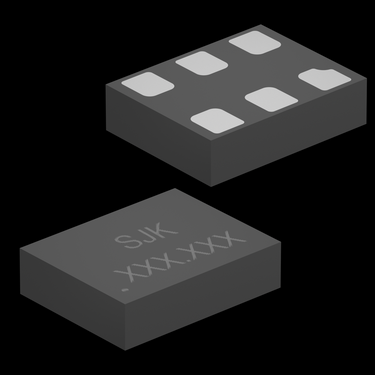
Where are Quartz Crystals Used? Exploring Future Trends in AI and Robotics
In the rapidly evolving landscape of modern electronics, semiconductors often dominate the conversation. However, the true heartbeat of any advanced digital system lies in its frequency control components. Without a stable, precise clock signal, even the most powerful processors cannot function reliably. As we push the boundaries of technology, quartz crystal applications are expanding far beyond standard consumer electronics, becoming the critical foundation for next-generation innovations.
For hardware R&D engineers and purchasing managers, selecting the right timing device is no longer a simple checkbox exercise; it is a strategic design decision that dictates system reliability, data throughput, and product lifespan. This comprehensive guide explores the demanding requirements of modern circuitry, from the server racks powering machine learning to the factory floors of tomorrow.
The Essential Role of Crystals in AI Processing Units
The processing power required for artificial intelligence relies heavily on massive data throughput and instantaneous communication between core components. In AI server architectures, GPUs, TPUs, and advanced ASICs must synchronize perfectly to handle neural network training and inference tasks. This synchronization is governed by strict AI hardware timing requirements. As data rates scale up to PCIe Gen 5 and Gen 6, or 100G/400G Ethernet, the tolerance for timing errors shrinks drastically. In these high-speed environments, phase noise and clock jitter become the primary enemies of signal integrity. When jitter exceeds acceptable margins, the bit error rate (BER) spikes, causing data packets to drop and forcing system re-transmissions that severely throttle AI computing performance.
To combat these signal integrity challenges, hardware engineers must carefully evaluate the internal structure and key indicators of their timing components, particularly load capacitance ($C_L$), equivalent series resistance (ESR), and high-frequency stability. In applications requiring differential signaling (such as LVDS or LVPECL) to minimize electromagnetic interference, traditional fundamental-mode quartz can sometimes be pushed to its physical limits. For highly rigorous computing environments—especially those subjected to thermal fluctuations and vibration—engineers often turn to advanced alternative architectures. Integrating a High-Performance Differential MEMS Oscillator provides the ultra-low jitter and dynamic stability necessary to maintain pristine signal paths in dense, high-heat AI processing units. Understanding these advanced quartz crystal applications and their MEMS counterparts allows designers to future-proof their high-speed computing hardware.
High-Frequency Timing for Robotics and Automation
As we transition from stationary computing to dynamic, moving systems, the demands on robotics electronics increase exponentially. Modern robotics rely on sensor fusion—the continuous, real-time integration of data from LiDAR, high-resolution vision systems, ultrasonic sensors, and Inertial Measurement Units (IMUs). If the microcontrollers processing these individual sensor feeds are not perfectly synchronized by a reliable clock source, spatial mapping errors occur, leading to navigational failures or imprecise motor control.
When designing the timing architecture for complex robotic kinematics, R&D engineers typically evaluate different classes of frequency control components based on the specific subsystem's needs. The choice fundamentally impacts the circuit design and the overall bill of materials (BOM):
Passive Quartz Resonators: Highly cost-effective and widely used for standard microcontroller clocking. However, they require careful matching of external load capacitors and are susceptible to board-level parasitic capacitance. They are ideal for non-critical, localized control boards within the robot where extreme precision is not the primary factor.
Active Crystal Oscillators (SPXO): These integrate the quartz blank and the oscillator circuit into a single, plug-and-play package. They eliminate the need for external capacitance matching, saving board space and reducing design complexity. SPXOs are heavily utilized in the primary processing units of autonomous robots to ensure a stable, continuous clock even under mechanical stress.
Temperature Compensated Oscillators (TCXO): For robots operating outdoors or in environments with massive temperature swings, standard quartz will experience frequency drift. TCXOs utilize an internal network to counteract the temperature curve of the quartz, maintaining stability down to $\pm 0.5$ ppm, which is mandatory for outdoor drone navigation and precision agricultural robotics.
Synchronization Challenges in Smart Manufacturing (Industry 4.0)
The backbone of smart manufacturing is deterministic communication. In an Industry 4.0 ecosystem, hundreds of automated machines, conveyor systems, and robotic arms must operate in absolute unison. This requires industrial networks like Time-Sensitive Networking (TSN) or EtherCAT, which guarantee that data packets arrive at exact, predictable microseconds. The Industry 4.0 components driving these networks face a unique set of synchronization challenges, primarily centered around environmental harshness and long-term aging stability. A factory floor is an electrically noisy, high-vibration environment characterized by extreme temperature gradients that can easily disrupt standard timing devices.
To maintain precision in these environments, engineers heavily rely on specialized quartz crystal applications. The working principle of a high-grade TCXO, for instance, is vital here. Inside the oscillator, a thermistor network continuously monitors the ambient temperature. As the temperature shifts, the network dynamically adjusts the voltage applied to an internal varactor diode, which in turn alters the load capacitance on the quartz crystal. This precise, real-time correction counteracts the natural frequency drift of the quartz blank, allowing the network node to maintain a stable clock signal regardless of the factory's thermal conditions. Furthermore, industrial components must feature ruggedized internal mountings to prevent the quartz blank from fracturing under heavy machine vibrations, ensuring decades of uninterrupted operation without the need for frequent recalibration.
Expanding the Horizon: Designing Timing Architectures for Automotive Electronics
While factory automation and robotics push the boundaries of mechanical timing, automotive electronics represent one of the fastest-growing and most stringent quartz crystal applications today. The modern electric vehicle (EV) is essentially a supercomputer on wheels, requiring an intricate web of timing devices to manage everything from power distribution to passenger safety.
Designing for automotive requires adherence to strict AEC-Q200 standards, which dictate rigorous thermal, shock, and moisture resistance testing. Hardware engineers must categorize their timing selections based on the critical nature of the vehicle subsystem:
Advanced Driver Assistance Systems (ADAS):The most demanding application in the vehicle. Radars, cameras, and LiDAR require ultra-low phase noise to accurately calculate the distance and speed of incoming objects. Any clock jitter here directly translates to delayed reaction times by the autonomous driving computer. High-stability, high-frequency active oscillators are mandatory.
In-Vehicle Infotainment (IVI): While not physically driving the car, modern IVI systems handle massive amounts of data for 4K displays, 5G connectivity, and wireless communication. Standard SMD crystal oscillators are typically used here, but they must still boast a wide operating temperature range (-40°C to +105°C) to survive cabin heat extremes.
Battery Management Systems (BMS): In EVs, the BMS constantly monitors cell voltages and temperatures. The timing components here must prioritize ultra-low power consumption and exceptional long-term aging stability, ensuring the microcontrollers can accurately calculate battery degradation over a 10-to-15-year vehicle lifespan.
Predicting the Next Decade of Quartz Technology
Looking ahead, the future of timing devices is being shaped by the relentless drive toward miniaturization and higher base frequencies. As IoT devices shrink and wearables become less intrusive, the frequency control market is forced to innovate beyond traditional mechanical cutting methods.
Photolithography—the same technology used to print semiconductor wafers—is increasingly being utilized to etch quartz blanks. This "inverted mesa" technology allows manufacturers to create microscopic quartz elements capable of vibrating at much higher fundamental frequencies (exceeding 100MHz) without relying on Phase-Locked Loops (PLLs), which can introduce unwanted noise. Additionally, we are seeing a convergence of technologies where traditional quartz crystal applications are being complemented by advanced MEMS and hybrid solutions, offering purchasing managers and engineers a broader, highly specialized toolkit to solve the complex timing challenges of the next decade.
FAQ: Quartz Crystal Applications and Selection
What are the most common quartz crystal applications in modern hardware design?
Beyond traditional consumer electronics like smartphones and laptops, the most critical quartz crystal applications today are found in 5G/6G telecommunications infrastructure, high-speed server racks, automotive ADAS systems, and industrial IoT sensors. Any device requiring synchronized data transfer relies on these components.
How does AI hardware timing differ from standard computing timing requirements?
AI hardware timing requires significantly lower phase noise and jitter compared to standard computing. Because AI accelerators utilize high-speed interconnects like PCIe Gen 5 to move terabytes of data, even picoseconds of clock jitter can cause bit errors, necessitating premium differential oscillators to maintain signal integrity.
Why are both quartz and MEMS technologies utilized in robotics electronics?
In robotics electronics, different subsystems have different needs. Traditional quartz offers exceptional phase noise performance and cost-effectiveness for standard processing boards. However, for robotic limbs or drones subjected to extreme shock and continuous vibration, MEMS oscillators are often integrated due to their silicon-based structural resilience.
What key factors should purchasing managers evaluate when sourcing Industry 4.0 components?
When sourcing timing devices as Industry 4.0 components, purchasing managers must look beyond unit cost. The critical factors are long-term aging stability, guaranteed operation across wide industrial temperature ranges (-40°C to +85°C or higher), and supply chain longevity to support the long lifecycles of factory machinery.
How will the future of timing devices impact the overall frequency control market?
The future of timing devices will drive the frequency control market toward hyper-miniaturization and lower power consumption. As edge computing and smart wearables proliferate, manufacturers will rely heavily on advanced photolithography to produce smaller, higher-frequency components that draw minimal current, extending battery life across billions of deployed devices.
Conclusion
The true heartbeat of any advanced digital system lies in its frequency control components. As architectures evolve from high-speed AI servers to rugged automotive electronics, selecting the right timing device is a critical strategic decision. SJK offers a comprehensive portfolio of high-performance quartz crystals, advanced MEMS, and TCXO solutions specifically designed to meet the rigorous demands of modern circuitry. By partnering with SJK, hardware engineers and purchasing managers can ensure their next-generation innovations operate with unwavering precision and long-term reliability.

Contact
Official Chinese website:www.q-crystal.com.cn
Satisfaction quality, Just-in-time service, and Key-cost offering
©2026 SJK All Rights Reserved.