



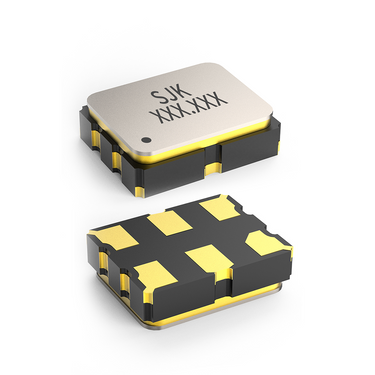
Design Considerations for Low Power Quartz Crystal Oscillators
Introduction
In today’s world of portable electronics—such as wearable health devices, rehabilitation monitors, and smart medical tools—users expect two things: long battery life and reliable performance. Devices that require frequent charging or deliver inconsistent results quickly lose user trust.
Behind the scenes, one critical component ensures that these systems function accurately: the quartz crystal oscillator. It provides the precise timing needed for data tracking, synchronization, and system control.
However, designing an oscillator that is both energy-efficient and stable over time presents a unique engineering challenge. Reducing power consumption often impacts accuracy, while improving stability can increase energy usage.
This article explores the key design considerations for low power quartz crystal oscillators, helping you understand how to achieve optimal performance in battery-operated systems.
Balancing Power Consumption and Frequency Stability
A fundamental challenge in oscillator design is finding the right balance between power consumption and frequency stability.
- Lower power consumption extends battery life
- Higher frequency stability ensures accurate timing
The Trade-Off
Reducing power typically involves lowering the oscillator’s drive strength. However, this makes the system more sensitive to external factors such as:
- Temperature changes
- Mechanical stress
- Electrical noise
These factors can lead to frequency drift, which affects the overall reliability of the device.
Practical Design Approach
To achieve a well-balanced design:
- Select high-quality quartz crystals with low drift characteristics
- Operate at the minimum current required for stable oscillation
- Consider environmental conditions during product use
- Use compensation techniques when necessary
In most consumer applications, the goal is not perfect precision, but consistent and reliable performance with minimal energy use.
Critical Factors for Battery-Powered Device Timing
In battery-operated timing systems, efficiency is critical. Even small inefficiencies can significantly shorten device lifespan.
Key Design Factors
1. Startup Time
Oscillators consume more power during startup than during steady operation.
- Faster startup reduces energy waste
- Especially important for devices using sleep/wake cycles
2. Load Capacitance Matching
Incorrect load capacitance can lead to:
- Frequency inaccuracies
- Increased current consumption
Proper matching ensures the oscillator runs efficiently and accurately.
3. Oscillator Circuit Design
The circuit topology directly affects power consumption.
- The Pierce oscillator is widely used due to its simplicity and low power requirements
- Optimized circuit design minimizes unnecessary current draw
4. Ultra-Low Power RTC Integration
Many low-power devices rely on real-time clock (RTC) oscillators, typically operating at 32.768 kHz.
These are designed for:
- Continuous operation
- Extremely low current consumption
- Long-term timing stability
They are commonly used in wearables, health monitors, and portable electronics.
Minimizing Drive Level (DL) to Prevent Crystal Aging
The drive level (DL) defines how much power is applied to the quartz crystal during operation.
Why Drive Level Matters
If the drive level is too high, it can cause:
- Accelerated crystal aging
- Frequency drift over time
- Reduced long-term stability
Best Practices
To maintain long-term reliability:
- Keep the drive level within manufacturer specifications
- Use current-limiting design techniques
- Avoid overdriving the crystal, even if it improves short-term stability
Long-Term Impact
In devices designed for continuous or long-term use, such as wearable monitors or medical equipment, maintaining a low drive level helps ensure:
- Stable performance over time
- Reduced maintenance or recalibration needs
Best Practices for Low-Power PCB Layout
Even the best components can underperform if the PCB layout for crystals is not properly designed.
Key Layout Guidelines
1. Keep Signal Paths Short
- Place the crystal close to the oscillator circuit
- Short traces reduce signal loss and interference
2. Minimize Electrical Noise
- Avoid routing near high-frequency or high-current signals
- Keep distance from RF modules and switching circuits
3. Use Proper Grounding
- Implement a solid ground plane
- Ensure stable reference for the oscillator circuit
4. Maintain Symmetry
- Symmetrical routing helps maintain balanced operation
- Reduces the risk of unstable oscillation
5. Reduce Parasitic Capacitance
- Excess capacitance increases power consumption
- Careful layout helps maintain correct load conditions
Conclusion
Designing a low power quartz crystal oscillator requires careful optimization across multiple factors:
- Power consumption for extended battery life
- Frequency stability for reliable operation
- Drive level control to prevent long-term degradation
- PCB layout to ensure efficient and stable performance
These considerations are especially important in battery-operated devices, where efficiency and accuracy directly influence user experience and product reliability.
By applying these principles, designers can build systems that deliver both energy efficiency and consistent performance over time.
FAQ About Low Power Quartz Crystal Oscillators
What is a low power quartz crystal oscillator?
A low power quartz crystal oscillator is a timing component designed to operate with minimal energy consumption while maintaining stable frequency output, commonly used in portable electronics.
Why is frequency stability important in oscillators?
Frequency stability ensures accurate timing, which is essential for synchronization, data logging, and overall device performance.
What happens if the drive level is too high?
Excessive drive level can accelerate crystal aging, causing frequency drift and reducing the lifespan of the component.
How does PCB layout affect oscillator efficiency?
Poor PCB layout can introduce noise, increase power consumption, and destabilize oscillation. Proper layout improves both efficiency and reliability.
Why is 32.768 kHz commonly used in RTC oscillators?
This frequency allows precise timekeeping with low power consumption, making it ideal for battery-powered real-time clock applications.

Contact
Official Chinese website:www.q-crystal.com.cn
Satisfaction quality, Just-in-time service, and Key-cost offering
©2026 SJK All Rights Reserved.