



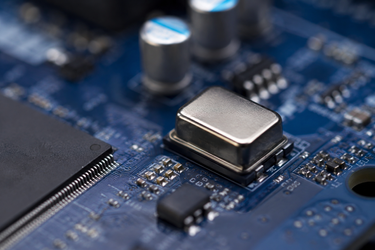
Spread Spectrum Crystal Oscillator: How It Reduces EMI and Improves EMC Performance
Electronic systems are becoming faster, more compact, and more densely integrated, making electromagnetic interference (EMI) one of the most common challenges in modern circuit design. A spread spectrum crystal oscillator offers a practical solution by slightly modulating the output clock frequency to distribute electromagnetic energy across a wider frequency range instead of concentrating it at a single peak.
This approach significantly reduces peak EMI emissions, helping products achieve better electromagnetic compatibility (EMC) performance while maintaining reliable timing accuracy. For engineers designing consumer electronics, automotive systems, industrial equipment, or communication devices, choosing the right EMI reduction oscillator can simplify EMC compliance without requiring extensive hardware redesign.
Why Do Traditional Clock Oscillators Cause EMI?
Every digital system relies on a stable clock source to synchronize processors, memory, communication interfaces, and peripheral devices. Traditional crystal oscillators generate highly accurate clock signals at fixed frequencies, making them essential components in countless electronic products.
However, this precision also contributes to EMI.
A fixed-frequency clock concentrates most of its electromagnetic energy at the fundamental frequency and its harmonic frequencies. As switching circuits repeatedly change states, these narrow-band emissions can radiate through PCB traces, cables, connectors, and even product enclosures.
The higher the operating frequency, the more noticeable this issue becomes. Modern high-speed interfaces such as USB, Ethernet, PCIe, HDMI, LVDS, and DDR memory often generate harmonic noise that may exceed regulatory emission limits.
Common sources of clock-related EMI include:
- High-frequency clock traces acting as unintended antennas.
- Fast signal rise and fall times that increase high-frequency harmonics.
- Long PCB routing or improper grounding.
- Multiple synchronized clock sources operating simultaneously.
- High-density electronic assemblies with limited shielding.
When EMI exceeds acceptable levels, manufacturers may encounter failed compliance testing under international standards such as CISPR 32, FCC Part 15, or EN 55032. Failing EMC certification often results in additional engineering costs, delayed product launches, and repeated laboratory testing.
Because clock signals are one of the primary contributors to radiated emissions, engineers frequently focus on oscillator selection during the early stages of EMC optimization.
How Does a Spread Spectrum Crystal Oscillator Reduce EMI?
Unlike conventional oscillators that output a constant frequency, a spread spectrum crystal oscillator intentionally introduces a very small frequency modulation around its nominal frequency.
Rather than concentrating electromagnetic energy at one narrow frequency, the oscillator continuously shifts the output clock within a controlled modulation range. Although the total transmitted energy remains nearly unchanged, the energy becomes distributed across multiple nearby frequencies.
As a result, peak emission levels measured during EMC testing become significantly lower.
This operating principle is similar to spreading a fixed amount of water over a larger surface. The total volume remains the same, but the highest point becomes much lower.
Most SSXO oscillator devices employ one of several modulation methods:
| Modulation | Method Characteristics | Typical Applications |
| Down Spread | Frequency varies below nominal value | Consumer electronics, industrial products |
| Center Spread | Frequency shifts above and below nominal value | General-purpose systems |
| Triangular Modulation | Smooth linear frequency variation | High-speed digital circuits |
| Random Modulation | Randomized frequency variation | Specialized EMI optimization |
Typical modulation depths are relatively small, often between ±0.25% and ±2%, depending on system requirements and application constraints. Because the modulation range remains carefully controlled, digital communication protocols and processor timing generally continue operating normally while peak EMI decreases.
Unlike shielding, ferrite beads, or additional filtering components, using a spread spectrum oscillator addresses EMI directly at its source—the clock generator itself. This often reduces the need for expensive PCB modifications later in product development.
Key Benefits of Using Spread Spectrum Crystal Oscillators
A spread spectrum crystal oscillator offers several advantages beyond lowering radiated emissions. Its value lies in improving overall system design efficiency while simplifying EMC compliance.
Some of the most important benefits include:
- Lower peak electromagnetic emissions during EMC testing.
- Improved probability of passing FCC, CISPR, CE, and other compliance standards.
- Reduced dependence on shielding cans, ferrite cores, or additional EMI filters.
- Simplified PCB layout optimization.
- Lower redesign costs when addressing late-stage EMC issues.
- Better overall electromagnetic compatibility in densely integrated systems.
Another important advantage is design flexibility.
Engineers often discover EMI problems only after prototype testing. At that stage, redesigning PCB layouts or adding shielding structures can be both time-consuming and expensive. Replacing a standard oscillator with an EMI reduction oscillator may provide an effective solution without major hardware modifications.
Spread spectrum technology can also contribute to system-level cost optimization. Although an SSXO oscillator may have a slightly higher component cost than a conventional oscillator, it can reduce expenses associated with additional shielding materials, EMC debugging, certification failures, and manufacturing revisions.
For high-volume production, avoiding even one redesign cycle can offset the incremental component cost many times over.
When Should You Choose a Spread Spectrum Crystal Oscillator?
Not every electronic product requires spread spectrum technology. Many low-frequency or low-speed applications operate well with traditional crystal oscillators.
However, a spread spectrum oscillator becomes especially valuable when EMC margins are tight or when electronic systems operate at increasingly higher speeds.
Typical applications include:
- Automotive electronic control units (ECUs).
- Industrial automation controllers.
- Medical diagnostic equipment.
- Communication infrastructure.
- Networking switches and routers.
- Consumer electronics.
- AI computing platforms.
- Embedded computing systems.
- High-speed storage devices.
- IoT gateways.
Several design situations indicate that an EMI reduction oscillator should be considered early in development:
- Previous EMC testing revealed excessive radiated emissions.
- The product contains multiple high-speed digital interfaces.
- PCB space limits the use of shielding structures.
- Product enclosures are primarily plastic instead of metal.
- Certification schedules leave little room for repeated redesigns.
- The design targets international markets requiring multiple EMC certifications.
Engineers should also evaluate timing requirements before implementation.
Although modulation depth is intentionally small, some precision timing applications—including certain RF systems, highly synchronized communication equipment, or specialized measurement instruments—may require fixed-frequency oscillators instead. In these cases, designers should carefully review clock tolerance, allowable jitter, and protocol requirements before selecting a SSXO oscillator.
Proper device selection always involves balancing EMI performance, timing accuracy, power consumption, package size, operating temperature, and long-term reliability.
Design Considerations When Integrating a Spread Spectrum Oscillator
Selecting the right oscillator is only one part of achieving good EMC performance. PCB design practices remain equally important.
A well-designed spread spectrum crystal oscillator can deliver the greatest benefit when combined with sound layout principles.
Engineers should pay attention to several implementation details:
- Keep clock traces as short as practical.
- Maintain continuous ground reference planes beneath clock routing.
- Avoid unnecessary vias on high-speed clock lines.
- Isolate clock signals from sensitive analog circuits.
- Use proper decoupling capacitors close to oscillator power pins.
- Follow the manufacturer's recommended PCB layout guidelines.
These practices help minimize additional radiation sources while allowing the EMI reduction oscillator to perform as intended.
In many real-world products, EMC improvements result from combining several optimization methods rather than relying on one solution alone. Oscillator selection, PCB layout, grounding strategy, shielding, filtering, and enclosure design all contribute to final EMC performance.
SJK Spread Spectrum Crystal Oscillator Solutions for EMI-Sensitive Applications
For applications where EMI control is a critical design objective, SJK provides a comprehensive portfolio of spread spectrum crystal oscillator products designed for modern electronic systems.
Its product range covers multiple frequency options, package sizes, output types, and operating conditions, allowing engineers to select solutions that match diverse application requirements. The oscillators are developed for stable frequency performance while incorporating controlled spread spectrum modulation to help reduce peak EMI emissions.
These products are suitable for applications including industrial control, networking equipment, consumer electronics, automotive electronics, embedded computing, and communication systems where EMC performance is an important consideration.
In addition to supplying oscillators, SJK also emphasizes manufacturing consistency, quality management, and technical support throughout product selection and design integration. Detailed electrical specifications, environmental characteristics, and reliability information help engineers evaluate compatibility with their systems before production.
When combined with appropriate PCB layout and EMC design practices, SJK SSXO oscillator solutions can become an effective part of a broader electromagnetic compatibility strategy.
Conclusion
A spread spectrum crystal oscillator is an effective method for reducing peak electromagnetic emissions without compromising normal clock functionality. By distributing clock energy across a controlled frequency range, it helps improve EMC performance, reduces the likelihood of compliance failures, and simplifies hardware optimization in high-speed electronic designs.
For manufacturers developing EMI-sensitive products, selecting a reliable spread spectrum oscillator early in the design process can reduce engineering effort and accelerate certification. SJK offers a broad selection of high-quality EMI reduction oscillator solutions that support engineers in building reliable, EMC-friendly electronic systems across a wide range of industries.
FAQ
What is a spread spectrum crystal oscillator?
A spread spectrum crystal oscillator is a clock source that slightly modulates its output frequency over time. Instead of concentrating electromagnetic energy at a single frequency, it spreads the energy across a wider bandwidth, reducing peak EMI emissions while maintaining stable system timing.
How much EMI reduction can a spread spectrum oscillator provide?
The level of EMI reduction depends on factors such as modulation depth, clock frequency, PCB layout, and enclosure design. In many applications, a spread spectrum oscillator can reduce peak radiated emissions by several decibels, helping products meet EMC compliance requirements more easily.
Does using an SSXO oscillator affect system performance?
In most digital applications, an SSXO oscillator has little or no noticeable impact on system performance because the frequency modulation remains within a carefully controlled range. However, systems requiring extremely precise timing or very low jitter should verify compatibility before implementation.
What applications commonly use EMI reduction oscillators?
An EMI reduction oscillator is widely used in automotive electronics, industrial automation, networking equipment, consumer electronics, medical devices, IoT products, and embedded systems where passing EMC testing is an important design objective.
Can a spread spectrum crystal oscillator replace EMI shielding?
Not entirely. A spread spectrum crystal oscillator reduces EMI at the clock source, but it should be considered one part of an overall EMC strategy. Good PCB layout, grounding, filtering, and shielding may still be necessary depending on the product's design and regulatory requirements.

Contact
Official Chinese website:www.q-crystal.com.cn
Satisfaction quality, Just-in-time service, and Key-cost offering
©2026 SJK All Rights Reserved.