



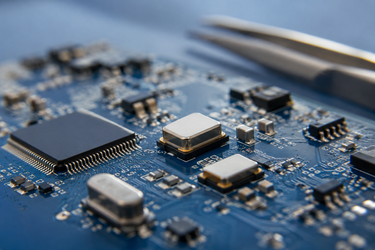
TCXO Selection Guide: How to Choose the Right Temperature Compensated Crystal Oscillator
Choosing the right TCXO oscillator starts with the application's actual frequency requirements rather than simply selecting the smallest or most accurate device. A suitable temperature compensated crystal oscillator should provide the required frequency stability across the expected temperature range while also meeting limits for phase noise, aging, power consumption, frequency range, supply voltage, and package size.
For applications such as GPS receivers, 5G infrastructure, automotive electronics, and IoT equipment, these parameters directly affect timing accuracy and overall system performance.
What Makes TCXO Different: Key Performance Advantages Over Standard Oscillators
A conventional crystal oscillator can provide good frequency accuracy under controlled conditions, but its frequency can shift as the surrounding temperature changes. A temperature compensated crystal oscillator addresses this limitation by incorporating temperature-sensing and compensation circuitry to reduce the crystal's temperature-related frequency deviation.
The main advantage of a TCXO oscillator is therefore not simply a higher nominal accuracy. Its value comes from maintaining a more consistent output frequency when operating conditions change. This is particularly important in communication, navigation, and timing systems where even a relatively small frequency error can accumulate into a noticeable performance problem.
Compared with a standard crystal oscillator, a TCXO can offer:
- Better frequency stability across a wider temperature range.
- More predictable timing performance for precision communication and navigation systems.
- Lower sensitivity to environmental temperature changes.
- A practical balance between accuracy, power consumption, size, and cost compared with more complex high-stability timing technologies.
The appropriate solution still depends on the application. If a device operates in a relatively stable indoor environment, the additional compensation of a TCXO may not always be necessary. For outdoor, automotive, industrial, or communication equipment exposed to changing temperatures, however, TCXO frequency stability can become a much more important selection criterion.
Key Parameters to Consider When Selecting a TCXO
Selecting a temperature compensated crystal oscillator requires more than comparing the frequency listed on a product page. Engineers should evaluate the oscillator against the complete operating environment and electrical requirements of the target system.
A practical selection process should consider frequency stability, TCXO operating temperature, frequency range, phase noise, aging, and power consumption together. Improving one specification can sometimes affect another, so the best component is the one that meets the system's actual requirements without unnecessary performance or cost.
Frequency Stability
TCXO frequency stability describes how much the oscillator's output frequency can deviate from its specified nominal frequency under defined conditions. It is commonly expressed in ppm, or parts per million. A smaller ppm value generally indicates tighter frequency control.
For example, an oscillator specified at ±0.5 ppm has a maximum specified deviation of 0.5 parts per million under the stated conditions. In a 10 MHz application, this corresponds to a frequency deviation of approximately ±5 Hz.
When evaluating a TCXO oscillator, check whether the stated stability applies across the full temperature range or only under specific test conditions. Also distinguish between initial frequency tolerance, temperature stability, supply sensitivity, load sensitivity, and long-term aging. These specifications describe different sources of frequency error and should not be treated as interchangeable.
SJK's TCXO portfolio lists products with frequency stability specifications reaching ±0.5 ppm on many standard models, while the company's overall TCXO/VC-TCXO offering states stability capability up to ±0.05 ppm for suitable configurations.
Temperature Range
The TCXO operating temperature should match the real thermal environment of the equipment rather than simply the room temperature during laboratory testing.
For industrial or outdoor equipment, the oscillator may experience rapid changes between cold startup, normal operation, and elevated internal temperatures. Automotive systems can face even more demanding thermal conditions.
SJK lists many of its TCXO and VC-TCXO products with an operating range of -40°C to +85°C, providing a useful range for applications that require stable timing under extended environmental variation.
When comparing devices, engineers should also check whether the specified TCXO frequency stability is guaranteed across the entire TCXO operating temperature range.
Frequency Range
The required output frequency should be determined from the system architecture, PLL configuration, clock input requirements, and downstream IC specifications.
A temperature compensated crystal oscillator with a frequency range that covers the target value provides greater flexibility during component selection. SJK's portfolio spans from 32.768 kHz to 125 MHz, while individual models cover different frequency windows. For example, its 2520 TCXO model supports 10–60 MHz, while other VC-TCXO models cover ranges such as 6.4–52 MHz or 40–150 MHz depending on the package and configuration.
This range also illustrates why the exact part number matters. A broad product-category specification does not mean that every TCXO oscillator supports every frequency within that category.
Phase Noise
Phase noise measures short-term fluctuations around the oscillator's carrier frequency. It becomes particularly important in communication, radar, navigation, and other systems where signal purity and timing precision influence receiver sensitivity or data performance.
A low-phase-noise temperature compensated crystal oscillator can be advantageous when the clock source is used in a frequency synthesizer or other signal chain where oscillator noise may affect the final output.
However, phase noise should be evaluated at the offset frequencies relevant to the application. Looking only at one phase-noise value can lead to an incomplete comparison. Engineers should review the oscillator's phase-noise curve or datasheet data and consider how the clock source interacts with the rest of the RF architecture.
Aging
Frequency aging refers to the gradual change in an oscillator's frequency over time. Even when a TCXO oscillator maintains excellent temperature stability, its frequency can slowly shift because of crystal characteristics, materials, mechanical stress, and operating conditions.
For systems designed for long service intervals, aging may become as important as initial accuracy. Telecommunications equipment, precision measurement instruments, and navigation systems may require tighter long-term frequency control.
When selecting a temperature compensated crystal oscillator, compare the aging specification over the intended service period and check the conditions under which the manufacturer measured it. A component with excellent initial TCXO frequency stability may still require additional frequency calibration if the application demands very long-term accuracy.
Power Consumption
Power consumption becomes especially important in battery-powered IoT devices, portable navigation equipment, and compact wireless products. A high-performance TCXO oscillator should therefore be evaluated not only for frequency accuracy but also for the current required under normal operating conditions.
The correct balance depends on the system. A communication base station with a continuous power supply may prioritize phase noise and frequency stability, while a battery-powered sensor may place greater emphasis on low current consumption and compact packaging.
Supply voltage and output format should also be checked alongside power consumption. SJK's listed TCXO products include supply-voltage options around 1.8–3.3 V, with some larger DIP configurations supporting up to 5.0 V. Available output formats include CMOS and clipped-sinewave options depending on the model.
SJK TCXO Solutions for Different Industries
Different industries place different priorities on TCXO performance. In IoT devices and portable electronics, low power consumption, compact packaging, and reliable frequency stability are often important because these products may operate on limited power while experiencing changes in ambient temperature.
For 5G, wireless communication, and navigation equipment, frequency stability and phase noise typically receive greater attention. A stable temperature compensated crystal oscillator can provide a more consistent reference frequency, while appropriate phase-noise performance helps support signal quality in frequency-sensitive applications.
Automotive and industrial equipment may require a wider TCXO operating temperature range because the oscillator can be exposed to significant temperature variations during operation. Package size, supply voltage, output type, and long-term aging should also be considered when selecting a component for these environments.
SJK offers TCXO and VC-TCXO solutions covering multiple frequency ranges, including products from 32.768 kHz to higher-frequency configurations, with various SMD and DIP packages. The portfolio includes different supply-voltage and output options, allowing engineers to match the oscillator more closely to their system requirements.
Conclusion
Choosing the right TCXO oscillator requires evaluating frequency stability, operating temperature, frequency range, phase noise, aging, and power consumption as a complete set rather than focusing on one specification. The final choice should reflect the application's environmental conditions, timing requirements, electrical design, and expected service life.
For applications requiring stable timing across changing temperatures, SJK Crystal provides a broad range of temperature compensated crystal oscillator and VC-TCXO solutions in different frequencies, packages, and configurations, making it a practical supplier to consider during the component selection process.
FAQ
What is a TCXO oscillator used for?
A TCXO oscillator provides a stable reference frequency when temperature changes could affect timing accuracy. It is commonly used in telecommunications, GPS and navigation equipment, IoT devices, automotive electronics, and industrial systems.
How does a temperature compensated crystal oscillator improve frequency stability?
A temperature compensated crystal oscillator uses temperature-related compensation to reduce the frequency changes caused by variations in the crystal's operating temperature. This helps maintain a more consistent output frequency across the specified temperature range.
What is a good TCXO frequency stability for my application?
The required TCXO frequency stability depends on the system. Applications such as precision communications and navigation may require tighter stability, while less demanding electronic devices may be adequately served by a lower-precision option. Always evaluate the stability specification across the actual operating conditions.
What should I consider when selecting a TCXO operating temperature range?
Choose a TCXO operating temperature range that covers the lowest and highest temperatures the equipment is expected to experience, including startup and abnormal environmental conditions. For industrial and automotive applications, a wider temperature range may be particularly important.
What is the difference between a TCXO and a standard crystal oscillator?
A TCXO includes temperature compensation to reduce frequency variation caused by temperature changes. A standard crystal oscillator generally has greater frequency deviation as temperature changes, making TCXO devices more suitable for applications requiring stable timing across varying environmental conditions.

Contact
Official Chinese website:www.q-crystal.com.cn
Satisfaction quality, Just-in-time service, and Key-cost offering
©2026 SJK All Rights Reserved.