



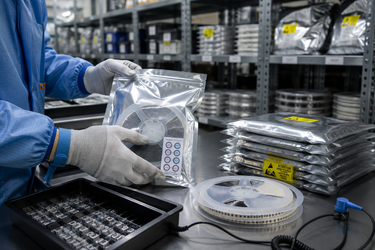
Best Practices for Handling and Storing Quartz Crystal Oscillators in Bulk
Properly handling quartz crystals and storing crystal oscillators in controlled environments is one of the most effective ways to preserve frequency stability, reduce failure risks, and maximize long-term inventory value.Whether inventory is held for a short production cycle or extended warehouse storage, applying recognized handling and storage practices helps maintain component performance, reduce quality risks, and support long-term reliability.
As modern electronics continue to demand tighter timing accuracy, quartz crystal oscillators are widely used in automotive electronics, industrial automation, telecommunications, medical equipment, consumer electronics, and IoT devices. Because these precision components are sensitive to environmental and mechanical stress, proper crystal oscillator preservation has become an essential part of B2B electronic component storage strategies.
This guide explains the key considerations for bulk storage and handling while highlighting practical methods adopted across the electronics manufacturing industry.
How Environmental Conditions Affect Quartz Crystal Performance
Quartz crystals are precision frequency-control devices that convert mechanical vibration into stable electrical signals through the piezoelectric effect. Despite their robust design, quartz crystal oscillators can still be affected by temperature changes, moisture, contamination, and mechanical stress encountered during storage and transportation.
One of the primary concerns when handling quartz crystals is contamination. A sealed package provides good protection against external contaminants, but continuous exposure to moisture, corrosive gases, dust, or chemical vapors may gradually reduce packaging performance and affect solderability over time.
Temperature fluctuations also contribute to unnecessary stress. Rapid transitions between hot and cold environments can cause condensation on packaging surfaces once the products return to room temperature. Moisture introduced during this process may increase the risk of oxidation or interfere with later assembly processes.
Mechanical vibration is another often-overlooked factor. While quartz crystal oscillators are engineered to tolerate normal logistics conditions, repeated vibration during transportation or improper warehouse handling may create microscopic internal stress that could affect long-term stability in demanding applications.
For companies responsible for storing crystal oscillators in bulk, environmental monitoring should be viewed as an investment rather than an additional cost. Stable storage conditions help maintain electrical performance while reducing unexpected inventory losses.
According to IPC moisture-sensitive device handling recommendations and JEDEC packaging practices, maintaining appropriate environmental controls throughout storage and logistics can significantly improve assembly reliability and reduce manufacturing defects for electronic components.
Temperature and Humidity Control in Storage Facilities
Environmental control is the foundation of effective B2B electronic component storage. Even though many quartz crystal oscillators are packaged to withstand transportation and warehouse conditions, maintaining a stable storage environment provides additional protection, especially for long-term inventory.
Most manufacturers recommend storing timing components in clean, dry indoor facilities where temperature and humidity remain relatively stable. Excessive humidity may accelerate oxidation on exposed leads, while prolonged high temperatures can gradually influence packaging materials and solderability.
A typical warehouse management strategy includes:
- Maintaining moderate room temperatures with minimal daily fluctuations.
- Maintaining appropriate humidity levels helps minimize moisture-related risks during storage.
- Avoiding direct sunlight and heat sources.
- Protecting components from corrosive gases, solvents, or chemical fumes.
- Using original moisture-barrier packaging whenever possible.
When products arrive from colder environments, they should be allowed to reach room temperature before opening moisture-sensitive packaging. This simple procedure helps prevent condensation from forming on the package or component surfaces.
Inventory rotation also contributes to effective crystal oscillator preservation. Applying First-In, First-Out (FIFO) principles ensures older inventory is consumed before newly received products, reducing unnecessary storage time.
For organizations managing multiple production sites or global procurement networks, digital warehouse monitoring systems can automatically record temperature and humidity data, providing traceability and helping quality teams identify potential environmental deviations before they affect production.
Preventing Physical Shock and ESD Damage During Assembly
Proper handling quartz crystals extends beyond warehouse storage. The assembly stage presents its own challenges, as improper handling or process variations may reduce production yield and affect the long-term performance of the finished product.
Electrostatic discharge (ESD) is a common source of damage during the assembly of sensitive electronic components, making proper ESD control essential. Although quartz crystal oscillators generally include protective packaging, direct exposure to static electricity during manual handling may still damage associated circuitry or affect electrical characteristics.
Manufacturers typically implement several ESD control measures, including:
- Grounded workstations.
- Antistatic wrist straps.
- Conductive storage trays.
- ESD-safe packaging materials.
- Ionizing equipment in sensitive production areas.
Mechanical shock should also be minimized throughout the assembly process. Components should never be dropped, compressed, or subjected to unnecessary bending forces. Automatic pick-and-place equipment should be properly calibrated to avoid excessive nozzle pressure during placement.
For surface-mount products, solder reflow profiles should follow the manufacturer's recommended temperature specifications. Excessive thermal stress during soldering may reduce long-term frequency stability or package reliability.
Operators should also avoid touching component terminals directly whenever possible. Oils, moisture, and contaminants from skin can affect solderability during later manufacturing stages.
Companies managing large inventories often establish standardized work instructions for handling quartz crystals, ensuring that warehouse personnel, logistics teams, and assembly operators follow consistent procedures across every production stage.
These operational controls not only improve production yield but also support consistent product quality for industries such as automotive electronics, industrial control systems, telecommunications infrastructure, and medical devices where timing accuracy is particularly important.
Maximizing the Shelf Life of Sourced Timing Components
Understanding crystal oscillator shelf life is essential for procurement professionals responsible for long-term inventory planning.
Unlike products with chemical degradation mechanisms, quartz crystal oscillators do not have a fixed expiration date under appropriate storage conditions. Instead, long-term performance largely depends on packaging quality, environmental control, inventory management, and compliance with manufacturer recommendations.
To maximize crystal oscillator shelf life, procurement teams should focus on several best practices.
Purchase From Qualified Manufacturers
Reliable manufacturers typically provide complete quality management systems, production traceability, environmental compliance certifications, and long-term product support. These factors improve consistency across multiple purchasing cycles and reduce supply chain uncertainty.
Maintain Original Packaging
Original moisture-barrier packaging protects components from humidity, dust, and physical contamination. Repackaging should only occur when necessary and under controlled conditions.
Monitor Inventory Regularly
Periodic inventory inspections help identify damaged packaging, expired moisture indicator cards, or environmental deviations before products enter production.
Reduce Excessive Storage Time
Although proper crystal oscillator preservation allows many components to remain usable for extended periods, purchasing quantities that closely match production forecasts helps reduce long-term inventory risks.
Verify Components Before Large-Scale Production
For inventory stored over extended periods, many manufacturers perform incoming quality inspections, solderability verification, or electrical testing before launching high-volume production. This additional verification step provides confidence that stored components continue to meet design specifications.
Many electronics manufacturers also integrate enterprise resource planning (ERP) systems with warehouse management software to improve inventory visibility and automate storage duration tracking. Such digital management practices further strengthen B2B electronic component storage by reducing human error and improving inventory turnover.
As electronic products become increasingly sophisticated, preserving timing component performance throughout the supply chain becomes equally important as selecting the correct frequency specification. Effective storing crystal oscillators practices contribute directly to manufacturing efficiency, product consistency, and long-term field reliability.
Additional Recommendations for Global Electronics Supply Chains
Global sourcing has extended transportation distances and increased warehouse transfer points, making consistent crystal oscillator preservation more important than ever.
Organizations purchasing timing components internationally should work closely with suppliers that maintain standardized packaging processes, traceable quality documentation, and consistent manufacturing controls. This helps ensure components experience minimal environmental variation before reaching the production line.
It is also beneficial to establish documented receiving procedures. Upon arrival, warehouse personnel should inspect external packaging for signs of moisture exposure, impact damage, or mishandling during transit. Recording these observations provides valuable traceability if future quality investigations become necessary.
For manufacturers serving automotive, industrial, or telecommunications sectors, integrating storage management into broader quality systems—such as ISO 9001 or automotive quality frameworks—can further strengthen supply chain reliability and reduce variation across production batches.
Conclusion
Proper handling quartz crystals, effective storing crystal oscillators, and systematic crystal oscillator preservation are essential practices for maintaining product reliability throughout the electronics supply chain. By controlling temperature and humidity, minimizing physical shock and ESD exposure, following FIFO inventory management, and monitoring crystal oscillator shelf life, manufacturers can protect both product performance and long-term inventory value.
For businesses sourcing quartz crystal oscillators in bulk, partnering with an experienced manufacturer can help ensure consistent product quality, stable supply, and reliable technical support. Q-Crystal offers a comprehensive portfolio of quartz crystals, crystal oscillators, MEMS oscillators, SAW devices, and customized frequency solutions, making it a dependable partner for a wide range of industrial and automotive applications.
FAQ
How should quartz crystal oscillators be stored for long-term reliability?
Quartz crystal oscillators should be stored in a clean, dry environment with stable temperature and humidity. Keeping components in their original moisture-barrier packaging and following FIFO (First-In, First-Out) inventory practices can help maintain performance and extend their usable storage period.
What factors can reduce crystal oscillator shelf life?
High humidity, temperature fluctuations, corrosive gases, excessive vibration, and improper handling may affect solderability or packaging integrity over time. Proper storage conditions are essential for maximizing crystal oscillator shelf life.
Why is ESD protection important when handling quartz crystals?
Electrostatic discharge (ESD) can damage sensitive electronic components or affect oscillator performance during assembly. Using grounded workstations, antistatic packaging, and ESD-safe handling procedures helps minimize this risk.
Can quartz crystal oscillators be stored for several years?
Many quartz crystal oscillators can remain reliable after long-term storage if they are kept under manufacturer-recommended environmental conditions. Before large-scale production, manufacturers often perform visual inspections, solderability tests, or electrical verification on long-stored inventory.
What are the best practices for storing crystal oscillators in bulk?
Best practices include maintaining stable temperature and humidity, protecting components from physical shock, keeping products in original packaging, avoiding chemical contamination, and rotating inventory using FIFO principles.
How do I choose a reliable quartz crystal oscillator supplier?
Look for manufacturers with established quality management systems, production traceability, technical support, and a broad portfolio of timing components. Suppliers that offer consistent quality and industry certifications can help improve supply chain reliability for long-term projects.

Contact
Official Chinese website:www.q-crystal.com.cn
Satisfaction quality, Just-in-time service, and Key-cost offering
©2026 SJK All Rights Reserved.