



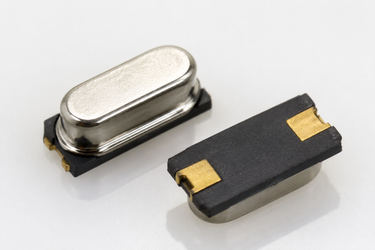
SMD vs. Through-Hole Crystal Oscillators: Which is Right for Your PCB Assembly?
Selecting the right SMD vs DIP crystal solution can significantly influence your product's manufacturability, reliability, and long-term performance. Whether you're designing an IoT sensor, a 5G communication module, or an industrial controller, the type of crystal oscillator packaging you choose affects PCB layout, automated assembly, production cost, and even future maintenance. While surface-mount technology has become the industry standard, through-hole crystals still play an important role in certain applications. So, how do you determine which option is best for your PCB assembly?
The Evolution of Crystal Oscillator Packaging
Electronic manufacturing has changed dramatically over the past few decades, and so has crystal oscillator packaging. Early electronic products relied almost exclusively on through-hole components, but today's high-density circuit boards have accelerated the adoption of surface-mount technology.
From Through-Hole to Surface Mount
Traditional through-hole crystal packages, often referred to as DIP (Dual In-line Package), feature metal leads inserted through drilled PCB holes before soldering. This method provides strong mechanical attachment and has served the electronics industry for decades.
As electronics became smaller and more complex, manufacturers required components that occupied less board space while supporting automated production. This demand led to the rapid growth of the SMD crystal oscillator, which is soldered directly onto the PCB surface.
Today, SMD packages dominate applications such as:
- Smartphones
- IoT devices
- Wearable electronics
- Automotive ECUs
- 5G communication equipment
- Industrial automation systems
Meanwhile, through-hole crystals continue to serve niche applications where durability, legacy compatibility, or manual servicing remains important.
Why Packaging Matters Beyond Size
Many engineers initially focus on package dimensions, but packaging affects far more than physical footprint.
The chosen crystal oscillator packaging influences:
- PCB routing flexibility
- Assembly efficiency
- Signal integrity
- Mechanical reliability
- Production scalability
- Maintenance accessibility
As PCB densities continue increasing, packaging decisions often become an important part of overall hardware optimization rather than a simple component selection.
Pros and Cons of SMD (Surface Mount Device) Crystals
Surface-mount technology has become the preferred solution for modern electronics manufacturing because it aligns well with automated production and compact product designs.
Advantages of SMD Crystal Oscillators
An SMD crystal oscillator offers several important benefits.
Compact PCB Design
Because SMD components mount directly onto the PCB surface, they occupy significantly less space than through-hole alternatives.
This enables:
- Higher component density
- Smaller product dimensions
- Multi-layer PCB optimization
- More flexible routing
Compact packaging is particularly valuable for wearable devices and portable consumer electronics.
Faster Automated Manufacturing
One of the biggest advantages of SMD technology is compatibility with automated SMT production lines.
Benefits include:
- High-speed pick-and-place assembly
- Lower labor costs
- Improved manufacturing consistency
- Higher production throughput
- Reduced assembly errors
For OEMs producing hundreds of thousands of units, automation significantly improves manufacturing efficiency.
Better High-Frequency Performance
Because SMD packages have shorter electrical paths, parasitic inductance and capacitance are generally reduced.
This helps improve:
- Signal integrity
- Frequency stability
- High-speed communication performance
- EMI characteristics
Applications such as RF communication modules and precision timing circuits benefit from these characteristics.
Potential Limitations of SMD Packages
Despite their advantages, SMD crystals are not always the ideal solution.
Possible drawbacks include:
- Smaller packages may be more difficult to rework manually.
- Mechanical stress from PCB bending can influence oscillator performance.
- Repairing damaged components often requires specialized SMT equipment.
For products designed primarily for field maintenance, these considerations may influence package selection.
When to Choose Through-Hole (DIP) Crystals for Legacy Systems
Although surface-mount technology dominates modern manufacturing, through-hole crystal packages remain relevant in several important situations.
Supporting Existing Hardware Platforms
Many industrial systems continue operating for decades.
Examples include:
- Factory automation equipment
- Medical instruments
- Test and measurement devices
- Aerospace electronics
- Military communication systems
These platforms were originally designed using through-hole PCB timing components, making redesigns both costly and unnecessary.
Replacing existing DIP crystals with identical through-hole components helps maintain long-term compatibility while avoiding expensive PCB modifications.
Improved Mechanical Strength
Because through-hole leads pass through the PCB, they provide stronger mechanical attachment than surface-mounted components.
This can be advantageous in environments involving:
- Continuous vibration
- Mechanical shock
- Frequent connector insertion
- Manual servicing
Some industrial equipment still specifies through-hole packages for these reasons.
Easier Maintenance and Prototyping
Through-hole crystals are also popular during engineering development.
Advantages include:
- Simple manual soldering
- Easy replacement during testing
- Convenient breadboard compatibility
- Faster prototype modification
For laboratory evaluation and educational projects, through-hole devices often simplify development.
However, for high-volume commercial manufacturing, manual assembly typically increases production costs compared with automated SMT processes.
Cost and Automation Analysis for High-Volume B2B Manufacturing
When comparing SMD vs DIP crystal options, purchasing decisions should consider the total manufacturing cost rather than component price alone.
Manufacturing Cost Comparison
The following table summarizes the differences between the two technologies.
| Feature | SMD Crystal Oscillator | Through-Hole Crystal |
|---|---|---|
| Assembly Method | Automated SMT | Manual or Wave Soldering |
| PCB Space | Minimal | Larger |
| Production Speed | Very High | Moderate |
| Labor Requirement | Low | Higher |
| Prototype Convenience | Moderate | Excellent |
| Large-Scale Manufacturing | Highly Suitable | Limited |
Although through-hole components may appear competitively priced individually, assembly labor often increases the overall manufacturing cost.
For high-volume production, SMD solutions generally provide greater economic advantages.
Automation Improves Consistency
Automated SMT assembly offers more than lower costs.
It also delivers:
- Repeatable solder quality
- Reduced human error
- Higher production yields
- Better process traceability
- Faster production scheduling
These factors become increasingly important for automotive electronics, telecommunications infrastructure, and consumer electronics manufacturers.
Total Cost of Ownership Matters
For B2B buyers, evaluating only unit price can be misleading.
The total ownership cost should also include:
- Manufacturing efficiency
- Production yield
- Product reliability
- Maintenance requirements
- Supply chain stability
An SMD crystal oscillator often reduces long-term operating costs by improving assembly efficiency and minimizing production variability.
Meanwhile, organizations maintaining legacy equipment may still find that through-hole components offer the most cost-effective solution due to existing hardware compatibility.
Ultimately, selecting between SMD vs DIP crystal technologies depends on your product's lifecycle, production volume, servicing requirements, and PCB design priorities.
Choosing the Right PCB Timing Components for Your Application
There is no universal answer when comparing surface-mount and through-hole oscillators. Instead, engineers should evaluate several practical considerations before making a decision.
Consider the following questions:
- Will the product be manufactured in high volumes?
- Is automated SMT assembly available?
- Does the design require maximum PCB density?
- Will field maintenance be common?
- Is compatibility with existing hardware essential?
For new electronic products, SMD crystal oscillators generally provide the best combination of size, automation, and manufacturing efficiency.
For legacy systems, repair applications, or prototype development, through-hole crystal devices may continue to offer practical advantages.
Partnering with an experienced supplier also helps ensure proper package selection, stable quality, and long-term supply continuity.
Conclusion
The debate between SMD vs DIP crystal solutions is less about which technology is universally better and more about selecting the right option for your application. SMD crystal oscillators excel in compact, automated, high-volume manufacturing, while through-hole crystals continue to provide value for legacy equipment, prototyping, and applications requiring strong mechanical attachment.
With more than 36 years of expertise in frequency control technology, SJK provides a comprehensive range of quartz crystal resonators, SMD crystal oscillators, TCXOs, VCXOs, OCXOs, RTC devices, and customized timing solutions for telecommunications, automotive electronics, industrial automation, IoT, and wearable applications. Whether you're optimizing a new PCB design or supporting long-term production, SJK's engineering team can help you choose the ideal timing solution.
FAQ
What is the difference between an SMD crystal oscillator and a through-hole crystal?
An SMD crystal oscillator mounts directly onto the PCB surface for automated assembly, while a through-hole crystal uses metal leads inserted through PCB holes, making it suitable for legacy systems and manual assembly.
Which is better for high-volume PCB assembly?
For large-scale manufacturing, an SMD crystal oscillator is generally preferred because it supports automated SMT production, improves efficiency, and reduces labor costs.
Are through-hole crystals still used today?
Yes. A through-hole crystal is still widely used in industrial equipment, aerospace systems, laboratory prototypes, and products requiring long-term maintenance or legacy compatibility.
How does crystal oscillator packaging affect PCB design?
Crystal oscillator packaging influences PCB size, routing flexibility, manufacturing methods, mechanical reliability, and assembly efficiency.
What should I consider when choosing PCB timing components?
When selecting PCB timing components, evaluate production volume, PCB space, assembly method, maintenance needs, environmental conditions, and long-term supply stability.
Can SMD and through-hole crystals offer similar timing accuracy?
Yes. Both package types can provide excellent frequency performance when properly designed. The primary differences lie in packaging, assembly process, and application requirements.
It is possible that you also want to know:
What is Quartz Crystal Aging? Causes, Impacts, and Mitigation Strategies
The Complete Guide to AEC-Q200 Certified Automotive Crystal Oscillators
How to Choose a Reliable Crystal Oscillator Manufacturer for Large-Scale Production

Contact
Official Chinese website:www.q-crystal.com.cn
Satisfaction quality, Just-in-time service, and Key-cost offering
©2026 SJK All Rights Reserved.